A perfume can smell excellent when the first sample arrives and still become a sourcing problem six months later.
For brands buying perfume from a perfume manufacturer, the real challenge is rarely producing one good sample. The harder part is reproducing the same fragrance, appearance, packaging quality, and product specifications across multiple production batches.
This is where manufacturing quality control becomes important.
For established Chinese perfume manufacturers, quality control is not supposed to be a final inspection performed after production is finished. A properly managed system starts with incoming raw materials and continues through formulation, production, filling, packaging, testing, batch documentation, and final release.
For international buyers, understanding this process makes it easier to distinguish between a factory that simply produces perfume and a manufacturer with a controlled production system.
1. Quality Control Starts Before the Perfume Is Made
One of the most important points in perfume manufacturing is also one of the easiest to overlook: quality control begins before the first ingredient enters the mixing tank.
Fragrance ingredients, alcohol, solvents, and other materials can vary in characteristics depending on their supplier, batch, storage conditions, and specifications. A reliable manufacturing process therefore starts with controlled purchasing and incoming inspection rather than assuming that every delivered material is automatically acceptable.
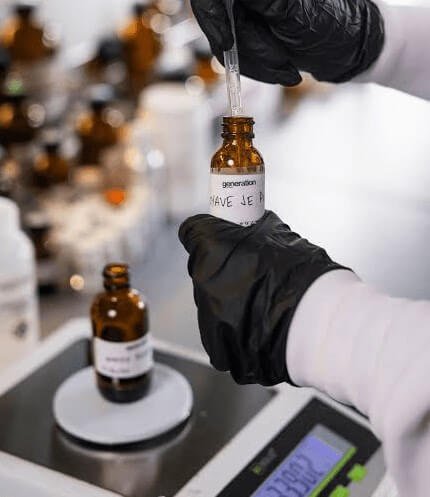
When materials arrive at a manufacturing facility, they may be checked against predefined specifications. Depending on the material and product requirements, checks can include appearance, color, odor, identification, analytical characteristics, documentation, and batch information.
IFRA’s recommendations for good operating practices state that fragrance ingredients should be appropriately sampled, tested against organoleptic and analytical specifications, and released by quality control through defined procedures. Materials that do not meet requirements should be identified and quarantined rather than being allowed into production.
This first checkpoint helps prevent a relatively small raw-material variation from becoming a much larger finished-product problem.
2. A Supplier Certificate Is Not the Entire Quality Control Process
For international buyers, it is common to request documents from raw-material suppliers. These documents are useful, but they should not automatically replace the manufacturer’s own quality-control procedures.
A manufacturer needs to know what material has actually arrived at the facility and whether it matches the specification required for the product being produced.
This is particularly relevant when a perfume formula contains multiple fragrance ingredients. A small difference in one material may not be obvious on paper but can affect the final odor profile or product performance.
The exact analytical methods used will depend on the material and the manufacturer’s specifications. Some fragrance materials may require instrumental analysis, while others may be evaluated using defined organoleptic or physical specifications. IFRA also publishes analytical-method guidance for certain fragrance-related testing applications.
The important point is not whether every material goes through the same test.
The important point is whether the manufacturer has a defined process for deciding what needs to be tested, how it is tested, and when the material can be released for production.
3. Formula Accuracy Is Critical to Batch-to-Batch Consistency
Once the raw materials have been approved, the next challenge is reproducing the approved formula accurately.
A commercial perfume formula is more than a list of ingredients. It is a controlled specification that needs to be reproduced consistently during perfume manufacturing production.
This is why weighing and measurement are important parts of manufacturing quality control.
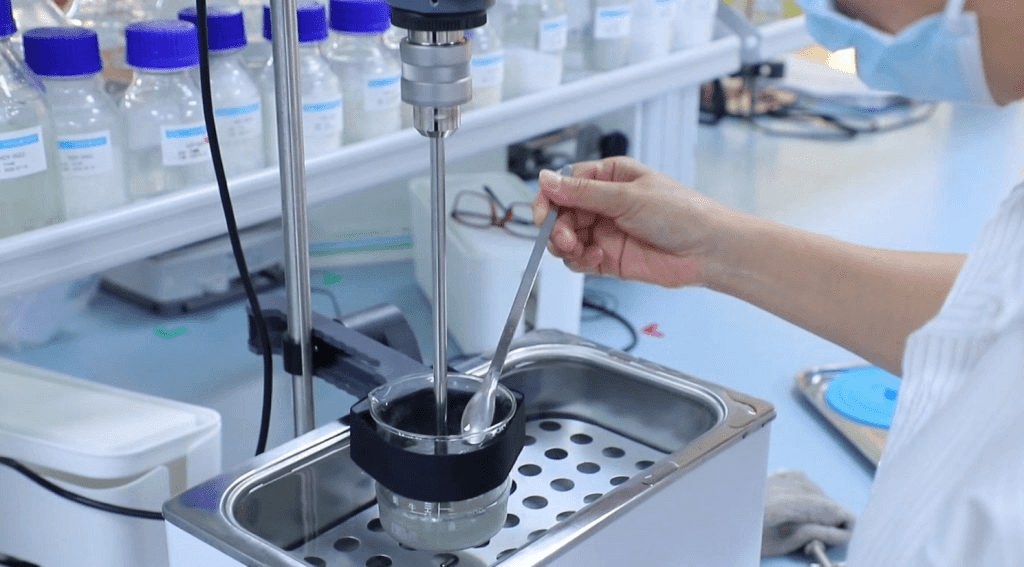
Production personnel should work from an approved formula and defined operating procedures. Materials need to be correctly identified, measured, and added according to the production instructions. Equipment also needs to be suitable for its intended use and maintained properly.
IFRA’s good operating practices specifically recommend that weighing and measuring equipment used in production and quality control be checked and calibrated at suitable intervals. They also call for manufacturing records that document the production history of each batch.
For brands developing a custom perfume formula, controlling the approved specification is particularly important because the formula becomes the reference point for future production.
If a factory cannot control the details behind that sample, maintaining consistent fragrance quality becomes much more difficult.

4. In-Process Quality Control Helps Catch Problems Early
Quality control should not wait until the perfume has already been filled into thousands of bottles.
During production, manufacturers can perform in-process checks to confirm that the product is developing according to the established specification.
Depending on the formula and product requirements, these checks may involve appearance, color, odor, homogeneity, physical characteristics, or other defined parameters.
The purpose is straightforward: identify potential deviations while there is still an opportunity to investigate and correct them.
This is one of the differences between a controlled manufacturing system and a process that relies heavily on final inspection.
A final inspection can identify a problem. In-process control can help prevent that problem from moving further down the production line.
For buyers, this distinction is worth asking about when evaluating a perfume factory.
Instead of simply asking, “Do you have quality control?” a better question is:
“At which stages of production do you perform quality checks?”
The answer can reveal much more about how the factory actually operates.
5. Finished Perfume Testing Is More Than Checking the Scent
Before a perfume batch is released, the finished product should be evaluated against its established specifications.
The exact testing program varies according to the product, formula, market, and customer requirements. A finished-product inspection may involve characteristics such as appearance, odor, color, physical properties, packaging condition, and other relevant specifications.
The final stage also provides an opportunity to confirm that the product being shipped corresponds to the correct batch and production documentation.
IFRA recommends that predefined properties of fragrance ingredients and finished products be monitored by a quality-control function operating under defined procedures. It also recommends maintaining records of specifications and test results for each batch.
This creates an important distinction:
A professional factory does not simply decide that a batch “looks good.” It compares the batch against predefined requirements.
Only when the required quality criteria are met should the batch move through the appropriate release process. If you are developing a private label or OEM perfume project and want to understand how a manufacturer manages quality control, talk to our fragrance manufacturing team.

6. Packaging Is Part of Product Quality
Perfume quality does not end with the liquid inside the bottle.
For a finished retail product, the bottle, pump, cap, label, carton, and other packaging components are part of the customer’s experience and can also affect product integrity.
Packaging inspections may therefore include checking the condition and cleanliness of components, bottle appearance, sprayer or pump function, closure fit, labeling, and other customer-specific requirements.
A perfume that has been correctly formulated can still create problems if bottles leak, pumps do not function properly, labels contain incorrect information, or packaging components are not suitable for the product.
IFRA’s good operating practices also address the condition, cleanliness, and suitability of packaging materials, as well as product identification and batch information on finished packages.
For private label projects, packaging quality should therefore be included in the same quality discussion as the fragrance formula itself.
7. Traceability: The Difference Between a Sample and a Controlled Production System
One of the strongest indicators of a mature manufacturing system is traceability.
Imagine that a brand discovers a problem with a particular shipment several weeks after delivery.
Can the manufacturer identify the production batch?
Can it determine when the batch was manufactured?
Can it identify the raw materials used?
Can it locate the relevant production and quality-control records?
Can it determine who or which equipment was responsible for the production process?
These questions are difficult to answer without proper documentation.
IFRA’s recommendations call for records that allow manufacturers to identify batches, production history or origin, and the dates of different control steps. They also recommend maintaining a separate batch manufacturing record containing information such as the product name, manufacturing date, batch identification, weight, packaging information, and responsible personnel or equipment.
For international buyers, traceability is particularly valuable because it creates a documented link between the finished product and the manufacturing process behind it.
That becomes even more important when a brand grows from a few hundred units to repeated production orders.
8. What Should You Ask a Chinese Perfume Manufacturer Before Placing an Order?
Price and sample quality are important when selecting a perfume manufacturer, but they should not be the only criteria.
Before moving into mass production, buyers can ask a manufacturer several practical questions:
How are incoming fragrance materials inspected?
This helps you understand whether raw materials are accepted based only on supplier documentation or are subject to the manufacturer’s own quality procedures.
How is the approved formula controlled during production?
A professional answer should explain how materials are identified, weighed, recorded, and processed.
How do you maintain batch-to-batch fragrance consistency?
Look for a process rather than a general statement such as “we guarantee consistency.”
What checks are performed before filling and packaging?
This shows whether the factory relies entirely on final inspection or uses quality checks throughout production.
How are finished batches released?
The manufacturer should be able to explain how test results and specifications are reviewed before shipment.
How are non-conforming materials handled?
Rejected materials should not simply remain mixed with approved inventory. IFRA recommends that rejected fragrance ingredients be appropriately identified and quarantined.
Can production and quality records be traced to a specific batch?
This is particularly important for long-term OEM and private label relationships.
A reliable manufacturer should be able to answer these questions with a defined process rather than simply saying that the factory has “strict quality control.”
9. What Standards Should Buyers Look For?
International buyers may encounter standards and industry guidelines when evaluating perfume and cosmetic manufacturers.
One relevant reference is ISO 22716, which provides guidelines for good manufacturing practices covering the production, control, storage, and shipment of cosmetic products. ISO currently lists the 2007 edition as the current confirmed version.
For fragrance-related safety and manufacturing practices, buyers may also encounter IFRA Standards and the IFRA Code of Practice. IFRA explains that its Standards can prohibit, restrict, or establish purity criteria for certain fragrance ingredients, while its Code of Practice includes good operating practices for fragrance ingredients and mixtures.
However, buyers should be careful about treating a standard or certificate as a complete substitute for supplier evaluation.
A certificate does not tell you everything about how a particular factory handles your specific formula.
The more useful approach is to look at the combination of documented procedures, actual production controls, testing, batch records, traceability, and regulatory documentation relevant to the target market.

10. Why Quality Control Matters When Sourcing Perfume from China
For a brand sourcing perfume from China, quality control ultimately comes down to reducing variation and making production more predictable.
The objective is not simply to make one attractive sample.
It is to create a manufacturing process capable of reproducing the approved product repeatedly while controlling raw materials, production parameters, packaging, testing, and documentation.
This becomes especially important for private label and OEM perfume projects. A brand may place an initial order based on an approved sample, but its long-term reputation depends on what happens during the second, fifth, or tenth production run.
A manufacturer with a structured quality-control system can provide a stronger foundation for that long-term relationship.
Conclusion
Choosing a perfume manufacturer should go beyond comparing quotations or evaluating a single sample.
The more important question is whether the factory has a repeatable quality system behind that sample.
From raw-material inspection and controlled formulation to in-process checks, finished-product testing, packaging inspection, and batch traceability, each stage contributes to the consistency of the final product.
For brands sourcing perfume from China, asking detailed questions about these processes can provide a much clearer picture of a manufacturer’s capabilities than a price list or factory introduction alone.
The best manufacturing partner is not simply the factory that can make your first sample.
It is the factory that can make the next 10,000 bottles to the same approved specification—and show you how that consistency is controlled.
Looking for a Perfume Manufacturing Partner?
Tell us about your fragrance concept, target market, packaging requirements, and expected order volume.